
Puspendu Maity’s Leadership Journey
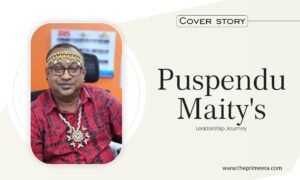
Leadership is not defined by a title alone. It is demonstrated through responsibility, the trust a leader earns and the willingness to stand alongside people when circumstances are uncertain.
For Puspendu Maity, a career spanning more than three decades has become a story of professional growth and personal connection in Papua New Guinea. Known widely as “Maity,” he has built his leadership journey around the people he has worked with: Papua New Guinean employees, families, communities, clients and business partners.
Today, he is the Founder and Managing Director of Wisdom Limited and Wisdom Travels Limited. His experience spans human resources, compliance, project administration, business development and operations. Yet he measures leadership not only by projects delivered or positions held, but also by the opportunities created for others and the relationships built along the way.
He has also been appointed by the Ministry of Tourism, Arts & Culture as the PNG Tourism, Arts and Culture Ambassador to India, in recognition of his longstanding contributions to Papua New Guinea. The Ministry has shown its confidence in him by promoting Papua New Guinea’s rich cultural heritage & tourism in India.
Discovering Papua New Guinea Through Its People
Maity moved to Papua New Guinea in 2011 as Head of Human Resources at ESSAR Projects, an Indian multinational company, after 15 years of service in India across different states on major infrastructure projects. He was assigned to the Exxon Mobil PNG LNG project in Komo, Hela Province.
The country presented a new professional and cultural environment. While his previous experience in India had prepared him for large infrastructure projects, Papua New Guinea taught him the importance of listening, patience, respect, and relationships.
He worked with Papua New Guinean employees across different provinces, communities and project locations. These experiences helped him understand that effective leadership in Papua New Guinea requires more than bringing international experience into the country. It requires learning from local people and understanding the communities in which businesses operate.
Through his work in the Western Highlands, Jiwaka, and Madang provinces, Maity became increasingly familiar with the skills, determination, and adaptability of Papua New Guinean workers.
He saw Papua New Guinean employees take on demanding responsibilities in difficult conditions, support major projects and work alongside expatriate teams. He also saw how employment affected entire families and communities. For him, an employee was never simply a name on a payroll. Every employee represented a family, a community and a future that could be strengthened through meaningful work.
Leadership During Uncertainty
The defining test of Maity’s leadership came in 2016, when ESSAR was considering closing its Papua New Guinea operations because there was no confirmed business in the pipeline. Simultaneously, changes were taking place within the local management team, including the appointment of a new director from India.
More than 100 expatriate employees and approximately 400 Papua New Guinean employees faced the possibility of demobilisation. For the employees, the impact extended beyond the workplace. Many had families and community responsibilities depending on their income.
Maity understood that the situation was not only about the possible closure of a business operation. It was also about the uncertainty that would affect hundreds of households. With the support of the new director, he began identifying opportunities that could keep the operation active. Within a month, he secured a road construction project.
That project became his first major success in business development and was followed by further projects, including two significant projects funded by the Asian Development Bank.
The achievement demonstrated an important aspect of his leadership. He used his knowledge of human resources, operations and stakeholder relationships to help create continued employment opportunities for both Papua New Guinean and expatriate employees.
He was not only managing people who performed the work; he was helping create the work that allowed people to remain employed.
Building Trust with National Employees
Working with Papua New Guinean employees also influenced Maity’s approach to leadership. He learned that trust cannot be created through instructions alone. It is built by listening, communicating clearly, respecting people’s concerns and remaining present when challenges arise.
Many employees want more than a salary. They want to be treated fairly, given opportunities to learn and recognised for their contributions.
Maity believes leaders must understand the human reality behind business decisions. When a project ends, a contract is delayed, or an organisation faces uncertainty, employees and their families feel the consequences directly. For that reason, he believes leadership requires honest communication and genuine consideration for the people affected by decisions.
His approach is to bring people together, explain the situation as clearly as possible and work towards practical solutions. He believes employees are more committed when they feel that leaders are willing to listen and stand with them during difficult times.
Moving Beyond the Job Description
As Maity’s responsibilities expanded, he moved from human resources into business development, operations and overall leadership.
After ESSAR Projects completed its major works, the company’s management in India decided to close its Papua New Guinea operations and return to India because of outstanding payment-related challenges. Maity tried to persuade the company to remain in Papua New Guinea and was given leadership responsibility for the PNG operations.
He became responsible for business development, project delivery, operational continuity and the livelihoods of hundreds of families.
This required him to work closely with Papua New Guinean employees, clients, communities and other stakeholders. It also required him to understand that successful business in Papua New Guinea depends on cooperation and relationships, not only technical expertise.
The experience shaped his leadership philosophy: A leader must be willing to take responsibility when circumstances are at their most difficult.
It also showed him that leadership means being accountable to people, not only to an organisation.
Choosing to Remain in Papua New Guinea
In 2022, ESSAR Projects finally decided to leave Papua New Guinea.
Maity could have returned to India or pursued another corporate opportunity. Instead, he chose to remain in Papua New Guinea, a country he had come to regard as his second home. His decision was influenced not only by professional opportunities, but also by his connection with the people he had worked with over many years.
Several of his Papua New Guinean and Indian friends also encouraged and supported him in many ways as he decided to continue his life and career in Papua New Guinea.
He had built relationships with Papua New Guinean employees, local businesses, communities and professional colleagues. He had also developed a deeper appreciation of the country’s culture, resilience and potential.
He resigned and established Wisdom Limited and Wisdom Travels Limited, with the intention of continuing to contribute through business and employment.
For Maity, entrepreneurship became a way to remain connected to the country and create new opportunities for people in Papua New Guinea.
Today, Wisdom Limited and Wisdom Travels Limited employ approximately 19 people directly, while the wider Wisdom Group provides employment to nearly 60 people. Maity also serves as a director of a local construction company, Aesthetic PNG Limited, contributing his leadership to projects in the rural Highlands region. Through these projects, the company has helped deliver important infrastructure in challenging environments.
Creating Opportunities and Growing Local Talent
A central principle of Maity’s leadership is that businesses should help people develop, build confidence and prepare for greater responsibility. Employment, in his view, should offer more than immediate income: it should create opportunities to gain experience, strengthen skills and progress.
This matters particularly for younger Papua New Guineans entering the workforce. Many bring ability, commitment and a willingness to learn, but need an opportunity to demonstrate their potential. Maity therefore looks beyond a candidate’s employment history to consider character, attitude, dependability, teamwork and openness to learning.
He believes skills can be developed, while strong character and a constructive attitude provide a foundation for long-term growth. Experienced workers also have an important role to play in mentoring younger colleagues and sharing knowledge. When learning becomes part of everyday work, individuals grow and organisations build stronger teams.
Wisdom’s workforce approach seeks to identify people who can contribute from the outset while also developing over time. Through a pre-screened, job-ready talent pool, the business supports clients with recruitment, compliance, immigration and travel arrangements. The aim is to provide practical workforce solutions while helping candidates access suitable employment opportunities.
Maity encourages organisations to consider not only the role a person can perform today, but also the responsibilities they may be ready to take on in the future. An employee may progress into a supervisory, management or specialist role, opening the door for another person to enter and develop. In this way, workforce development can create a continuing cycle of opportunity and stronger local capability.
Respecting Local Knowledge and Culture
Mr. Maity at Mt. Hagen Cultural Show, celebrating PNG’s rich cultural heritage.
Maity’s experience has also taught him that leadership in Papua New Guinea requires cultural understanding.
Business decisions affect people differently depending on their community, family responsibilities and local circumstances. Leaders who do not listen may misunderstand the real issues facing employees and communities.
For Maity, respect begins with taking time to understand people’s perspectives. It means recognising the importance of family, community, tradition and local relationships.
He believes international experience can be valuable, but it must be combined with local knowledge. The most effective leaders are those who remain open to learning from Papua New Guineans.
Leadership in Papua New Guinea is not about imposing an outside model. It is about working with people, understanding the local context and building solutions together.
People at the Centre of Business
Maity’s leadership principle is simple: When leaders take care of their people, people take care of the business.
This does not mean that business standards or performance expectations are ignored. It means that people are given the support and clarity needed to meet those expectations.
When employee needs and organisational requirements appear to conflict, Maity prefers open conversation. He considers what the business genuinely needs, listens to the employee’s concerns and looks for a fair and practical solution.
He believes that employees who feel respected and included are more likely to take ownership of their work.
In Papua New Guinea, where relationships are an important part of professional and community life, this approach can help build stronger teams and more sustainable businesses.
A Shared Future
Maity is optimistic about Papua New Guinea’s future. He sees opportunities in mining, infrastructure, technology, tourism, transport, professional services and other emerging sectors.
He also believes Papua New Guinea’s greatest strength is its people.
Many Papua New Guineans are gaining education and professional experience both locally and overseas. When they return, they bring new skills, ideas and perspectives that can contribute to national development.
For Maity, the future of business in Papua New Guinea should involve stronger partnerships between local talent, responsible businesses and international experience.
He believes businesses can contribute meaningfully by:
- Employing and developing Papua New Guineans
- Supporting local suppliers and service providers
- Respecting communities and cultural values
- Sharing knowledge and professional skills
- Building long-term relationships
- Creating opportunities beyond short-term contracts
Development, in his view, should not be measured only by the size of a project. It should also be measured by how many people gain skills, employment, confidence and new opportunities through that project.
A leader who believes true success is measured beyond business.
Advice to Emerging Papua New Guinean Leaders
Maity encourages emerging Papua New Guinean leaders to believe in their own ability while remaining committed to learning.
His advice is to become excellent at their work, develop strong communication skills and understand both the local and international dimensions of business.
He also encourages young leaders to be patient. Career development does not happen overnight. Experience is built through responsibility, challenges and the willingness to learn from mistakes.
For those involved in negotiation and business leadership, he recommends listening carefully, understanding different perspectives and seeking solutions that create long-term value.
Most importantly, he believes leaders should remain connected to their people and communities.
A leader’s success should not be measured only by personal achievement, but also by the opportunities created for others.
A Leadership Journey Connected to Papua New Guinea
Puspendu Maity’s journey is one of professional evolution and enduring connection. He arrived in Papua New Guinea with experience in human resources and infrastructure projects; over time, he became a business development leader, an operations manager and an entrepreneur.
Yet his leadership has been shaped as much by the people he has met as by the positions he has held. Employees have demonstrated resilience and commitment; communities have reinforced the importance of listening and respect; business relationships have shown the value of trust; and difficult circumstances have tested the importance of responsibility.
As he continues to develop Wisdom Limited, Wisdom Travels Limited and other business partnerships, Maity remains guided by a principle that connects his experience to his ambitions for the future: businesses are more likely to grow sustainably when their people, communities and country have the opportunity to grow with them.