
Philippines Plans to Expand Military Drone Capabilities
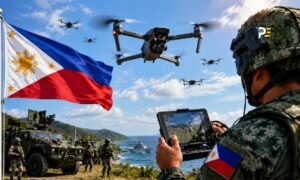
The Philippines wants to make its military stronger by creating and buying flying machines that don’t need a pilot. This is part of a plan to make the army and navy better equipped. Defence Secretary Gilberto Teodoro talked about this on Tuesday during a meeting where the government talked about money for the military.
This move is happening because the Philippines is trying to be more ready to protect itself. The country is getting ready for dangers in the area. Along with the flying machines the Philippines is also looking to buy big ships that can carry missiles and other important military tools.
Teodoro said the country wants to build flying machines but also needs better places and tools to use them. This includes ways to send messages, better internet connections and people who know how to use the machines in the right way.
The Philippines already uses flying machines for tasks like watching the area finding things and learning about what’s happening. Making these machines better can help the military watch the sea closely and react faster to problems.
The plan for 2027 has 50 billion pesos, which’s about $810.4 million.He wants a 6.3 percent increase, which would make the 305.5 billion pesos for 2026.
Information about the drone systems that are being considered has not been shared publicly. The Philippines is also in discussions with countries including Ukraine and the United States over drone-related capabilities.
The country’s push to expand unmanned systems comes against the backdrop of continuing tensions in the South China Sea. Manila has put effort into boosting surveillance and external defence because meetings with China have become more frequent, in disputed waters.
In June the United States gave the military four solar‑powered sea drones to aid maritime surveillance.. The development adds to the Philippines’ growing interest in using unmanned technology for security operations.
For Manila, drones are becoming part of a wider military modernisation effort rather than a standalone capability. The planned investments in unmanned systems, naval assets, communications and other equipment are expected to shape how the Philippines responds to changing security challenges in the region.